











PayPal POS: How It Works, What It Costs and Which Alternatives to Consider
The PayPal POS is PayPal's in-store acceptance solution, which over time inherited the technology of the former Zettle: a physical terminal sold at €199 (€249 with a barcode reader) plus a free POS app that turns the smartphone into a contactless reader with Tap to Pay. The card commission is 1.79% per domestic transaction. In this guide we explain how the PayPal POS works, how much it really costs between hardware and fees, and why for anyone who regularly accepts cards in-store a POS with IC++ pricing like RoxPay's: €0.15 + 0.35%-0.85% (IC++) per transaction, is more convenient.
How the PayPal POS works
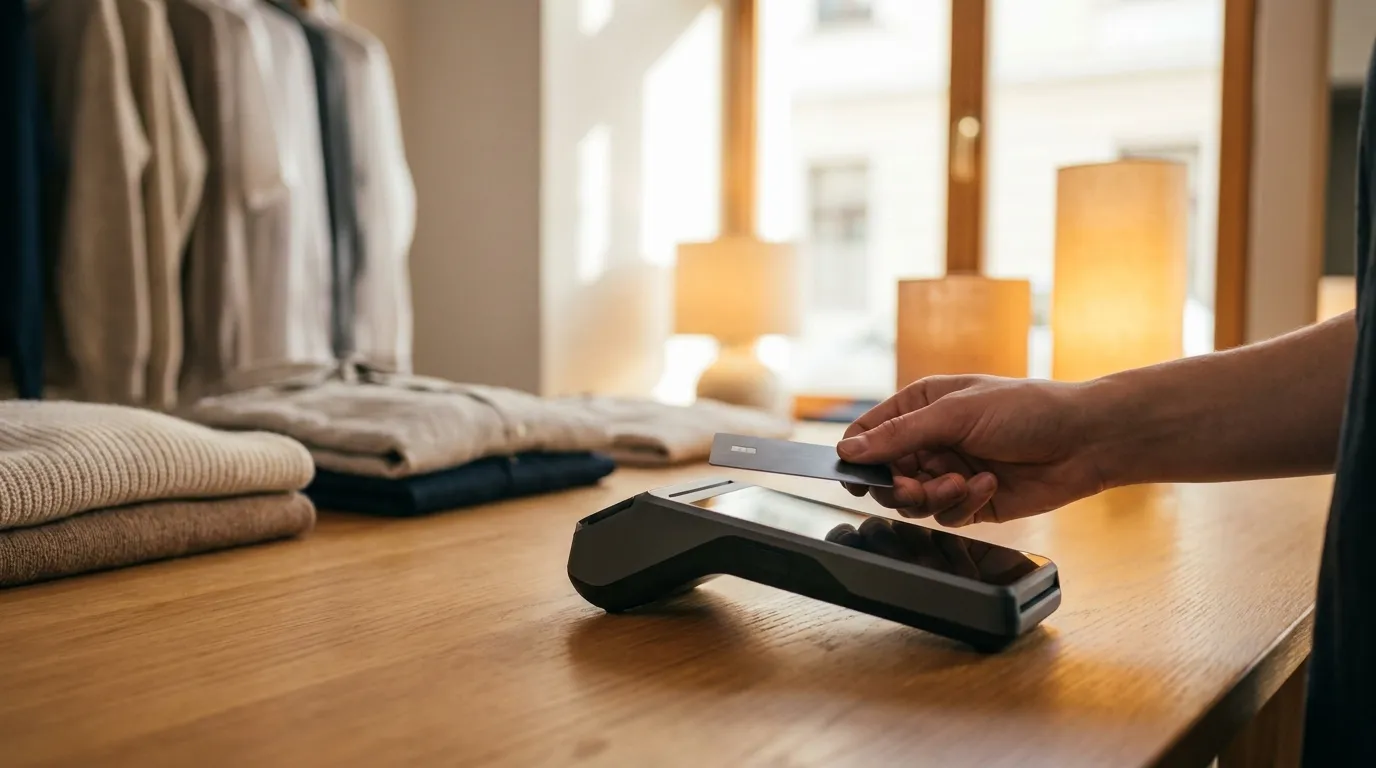
The PayPal POS consists of two elements. The physical terminal is purchased at €199 (or €249 with a barcode reader) and accepts cards and contactless payments. Alternatively, the POS app is free and uses Tap to Pay technology: the customer taps the card or smartphone on the merchant's device, with no dedicated hardware. In both cases the proceeds flow into the merchant's PayPal account.
The structural limit is the destination of the proceeds: everything passes through the PayPal balance, with withdrawal times and methods tied to the wallet rather than to an ordinary bank account. For anyone who wants a POS connected directly to their account and traditional acquiring, the comparison must be made with an independent POS, as explained in the guide to bank POS vs independent gateway.
PayPal POS costs: hardware and fees
The cost of the PayPal POS is divided into two items. The hardware is a one-time purchase: €199 for the base terminal, €249 for the version with a barcode reader, plus possible shipping costs. The POS app is instead free. On the fees side, the price list applies 1.79% per domestic transaction on cards and contactless, with no additional fixed fee.
On a €20 ticket the 1.79% commission is €0.36, on a €100 ticket it rises to €1.79. It is a flat rate that does not distinguish between a low-interchange debit card and a premium card: the merchant pays the same percentage on both. The comparison with RoxPay's IC++ model, which applies €0.15 plus 0.35%-0.85% depending on the card type, shows how a transparent, component-based rate costs less on real volumes: we cover it in depth in the guide to calculating IC++ fees.
Limits of the PayPal POS for a structured business
The PayPal POS has two limits that emerge as the business grows. The first is the destination of the proceeds: funds accumulate in the PayPal balance and must be withdrawn to a bank account, with steps and times that depend on the wallet's policies. The second is the flat rate: the 1.79% applies indiscriminately to every card, without exploiting the fact that European debit cards have an interchange legally capped at 0.2% by the EU IFR Regulation, while corporate or premium cards have higher costs.
An IC++ pricing separates these components and charges the merchant the actual cost of the card plus a declared markup: this is why, on the volumes of an average shop, the cost per transaction drops. If you are evaluating the overall cost of a terminal, our analysis of how much a POS costs between fees, monthly fees and hidden costs helps you do the math over 12 months.
PayPal POS vs RoxPay POS: fee comparison
Let's compare PayPal POS's 1.79% flat rate with RoxPay's IC++ pricing on an average ticket of €50. On €2,000 of monthly volume (40 transactions) PayPal keeps €35.80, while RoxPay applies €6 of fixed fee plus a component between €7 and €17, for a total between €13 and €23. On €5,000 (100 transactions) the comparison goes from €89.50 to a range between €32.50 and €57.50. On €20,000 (400 transactions) the comparison is between €358 and a range between €130 and €230.
Beyond the cost, the RoxPay POS connects the proceeds directly to the merchant's account without passing through an intermediate wallet, and maintains transparency on interchange and scheme fees even as volume grows. For an overview of the main providers, we refer to the payment gateway comparison in Italy.
Frequently Asked Questions
How much does a RoxPay POS cost compared to the PayPal POS?
The PayPal POS charges 1.79% flat on every sale, plus EUR 199 for the terminal. With RoxPay you pay EUR 0.15 plus 0.35% to 0.85% per transaction: on EUR 3,000 of monthly revenue the difference exceeds EUR 50.
Why is IC++ pricing cheaper than PayPal's 1.79% flat rate?
Debit cards in Italy cost between 0.2% and 0.3% interbank: a flat rate overprices them to subsidise premium cards. With RoxPay's IC++ every transaction pays its real cost, in line with EU IFR 25/2023, which requires costs to be separated.
Where do RoxPay funds go after each sale?
With RoxPay, funds settle directly into your business current account, with no intermediate balance and no transfer. With PayPal they stay in a wallet and reaching your bank requires extra steps and waiting days.
Does the RoxPay POS accept contactless and smartphone payments?
Yes: RoxPay terminals accept contactless cards, Apple Pay and Google Pay. The customer taps a card or phone, the amount settles to your bank account at IC++ rates with no monthly fee.
You might also like
High Risk Payment Gateway
Secure payment processing for high-risk industries with multi-acquirer routing and chargeback protection.
Small Business Payment Solutions
Transparent IC++ pricing, free Smart POS terminal, and 24-hour activation for small businesses.
E-commerce Payment Integrations
One-click plugins for WooCommerce, Magento, and PrestaShop with full API access.
Optimize your payments today
Discover why Italian businesses chose RoxPay over PayPal. Compare the real costs at /en/contact.
✓ No monthly fixed costs · ✓ Activation in 24 hours · ✓ Dedicated technical support